Thursday, 30 May 2013

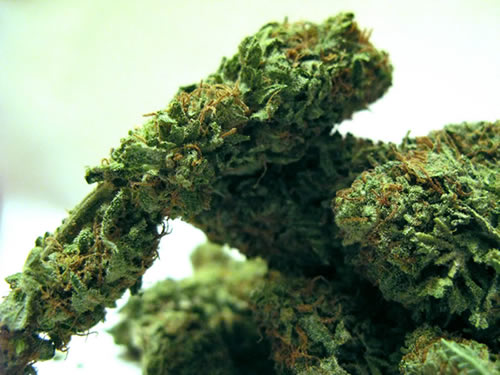
Women fighting for their lives after taking “contaminated” cannabis as Gardai issue warning

http://www.independent.ie/irish-news/women-fighting-for-their-lives-after-taking-contaminated-cannabis-as-gardai-issue-warning-29307380.html

Elaine Keogh – 30 May 2013

TWO women are fighting for their lives after taking “contaminated” cannabis.

The women, both in their 20s – one of whom is understood to be a mother – are in intensive care in hospital today.
Gardai have expressed concern that more drug users could be at risk from the same toxic batch of drugs.
The women, who do not know each other, presented separately to the same hospital in Drogheda. One 25-year-old is said to have “catastrophic” injuries and is suffering from multiple organ failure.
Last night gardai confirmed that two women from Louth are in a life-threatening condition after taking a drug. Both are in the intensive care unit of Our Lady of Lourdes Hospital.
The women are understood to have first taken ill on Monday night of this week.
One of the women has not regained consciousness since being brought into hospital and is on life support.
The second woman became seriously ill in the early hours of yesterday morning and “the symptoms are far too serious to have been caused by cannabis on its own,” said one source.
Gardai are desperately investigating the source of the cannabis – which may have been mixed with a synthetic drug – to establish if there is a bad batch of drugs currently on the streets of the North East.
Follow-up searches of two houses in Drogheda and mid-Louth resulted in some cannabis being seized which is being tested to identify what it contains. However it is believed that it can be difficult to detect synthetic drugs in these tests.
Last night Superintendent Gerry Smith, at Drogheda Garda Station, said: “We are concerned that other people who use cannabis may suffer the same effects.”
Irish Independent

Industrial Hemp: A Win-Win For The Economy And The Environment

http://www.forbes.com/sites/ashoka/2013/05/29/industrial-hemp-a-win-win-for-the-economy-and-the-environment/

5/29/2013
  
Logan Yonavjak (@Loganyon) makes a case for allowing farmers in the United States to grow hemp. 

Industrial hemp was once a dominant crop on the American landscape. This hardy and renewable resource (one of the earliest domesticated plants known, with roots dating back to the Neolothic Age in China) was refined for various industrial applications, including paper, textiles, and cordage.

Over time, the use of industrial hemp has evolved into an even greater variety of products, including health foods, organic body care, clothing, construction materials, biofuels, plastic composites and more (according to one source, more than 25,000 products can be made from hemp).

In the U.S., the first hemp plantings were in Jamestown, Virginia, where growing hemp was actually mandatory.

 From then on hemp was used in everything from 19th century clipper ship sails to the covers of pioneer wagons. The Declaration of Independence was drafted on hemp paper, and even the finest Bible paper today remains hemp-based.

Industrial hemp being grown for fiber and grain in France. (Photo credit: Wikipedia)


In the early 20th century, hemp-derived cellulose was promoted as an affordable and renewable raw material for plastics; Henry Ford even built a prototype car from biocomposite materials, using agricultural fiber such as hemp.
After that things started to go downhill. In 1937, the passage of “Marihuana Tax Act” occurred, and, despite the U.S. government’s “Hemp for Victory” campaign during World War II, misplaced fears that industrial hemp is the same as marijuana combined with targeted harassment by law enforcement discouraged farmers from growing hemp. The last crop was grown in Wisconsin in 1958, and by 1970 the Controlled Substances Act (CSA) formally prohibited cultivation (although the state of Hawaii is home to the first industrial hemp crop to be cultivated since the passage of the CSA).

The Situation Today

Sustainable hemp seed, fiber and oil are still used in raw materials by major companies, including Ford Motors, Patagonia, and The Body Shop, to make a wide variety of products. However, most hemp product manufacturers are forced to import hemp seed, oil and fiber from growers in Canada, Europe, and China because American farmers are prohibited by law from growing this low-input sustainable crop.
In 2012 the U.S. hemp industry was valued at an estimated $500 million in annual retail sales and growing for all hemp products, according to the Hemp Industries Association, a non-profit trade organization consisting of hundreds of hemp businesses.

Not only can hemp be used for an astonishing number of products, its net environmental benefit is impressive. Among the more salient features, hemp grows in a variety of climates and soil types, is naturally resistant to most pests, and grows very tightly spaced allowing it to outcompete most weeds. A natural substitute for cotton and wood fiber, hemp can also be pulped using fewer chemicals than wood because of its low lignin content. Its natural brightness can obviate the need to use chlorine bleach.
Why is this incredible plant illegal?
Because it is erroneously confounded with marijuana, and many policymakers believe that by legalizing hemp they are legalizing marijuana, which is not true. Canada, Britain, France, Germany, and Spain, along with over twenty other countries, cultivate and process industrial hemp without affecting the enforcement of marijuana laws. (More common misperceptions about hemp and factual rebuttals.)

 In fact, industrial hemp and marijuana are different breeds of Cannabis sativa; hemp has no value as a recreational drug. Actually smoking large amounts of hemp flowers can produce a significant headache, but not a high.
To delve further in the details, in most western countries industrial hemp is distinguished from marijuana on the basis of THC (the chief intoxicant in marijuana) content, which allows the growing of industrial hemp for fiber and seed. Regulations in the E.U. and Canada (31 countries currently grow industrial hemp) limit THC levels in hemp flowers to 0.2 percent and 0.3 percent, respectively, and prevent attempts to camouflage marijuana in hemp fields. Comparatively, THC levels in marijuana flowers are generally between 3 percent and 15 percent.
A hemp revival is beginning to gain momentum. Perception is beginning to shift in the U.S. Over the past several decades, there’s been a resurgence of interest in hemp by a diverse but increasingly politically influential and unified group of businesses, farmers, nutritionists, activists, and green consumers.


What has to occur is a change in the federal policy to essentially revise the definition of “marijuana” so that the term excludes industrial hemp, and then enact specified procedures and requirements relating to growing industrial hemp and those who cultivate industrial hemp.
“A change in federal policy to once again allow hemp farming would mean instant job creation, among many other economic and environmental benefits,” says Tom Murphy, the National Outreach Coordinator of Vote Hemp.
Current Federal and State Legislative Progress
The Industrial Hemp Farming Act of 2013 (H.R. 525) was recently introduced in the House with 28 original co-sponsors, and it was quickly joined by a companion bill in the Senate (S. 359) which was introduced by Senators Ron Wyden (D-OR), Rand Paul (R-KY), Jeff Merkley (D-OR), and Minority Leader Mitch McConnell (R-KY), underscoring the bipartisan support around the hemp issue.
If passed, the bills would remove federal restrictions on the domestic cultivation of industrial hemp, defined as the non-drug oilseed and fiber varieties of Cannabis. The full text of the bills, as well as status and co-sponsors, can be found online.
H.R. 525 is the fifth bill introduced in the U.S. House of Representatives in support of industrial hemp farming since the federal government outlawed it in the U.S. in 1971.
At the state level, the first hemp bill was introduced in Colorado in 1995. To date, 31 states have introduced pro-hemp legislation and 19 have passed such legislation.
  • Eight states (Colorado, Maine, Montana, North Dakota, Oregon, Vermont, Washington and West Virginia) have defined industrial hemp as distinct and removed barriers to its production;
  • Three states (Hawaii, Kentucky and Maryland) have passed bills creating commissions or authorizing hemp research;
  • Nine states (California, Colorado, Illinois, Montana, New Hampshire, New Mexico, North Dakota, Vermont and Virginia) have passed hemp resolutions; and,
  • Six states (Arkansas, Maine, Minnesota, New Mexico, North Carolina and Vermont) have passed hemp study bills.
However, despite state authorization to grow hemp, farmers in those states still risk raids by federal agents, prison time, and property and civil asset forfeiture if they plant the crop due to the failure of federal policy to distinguish non-drug oilseed and fiber varieties of Cannabis (i.e., industrial hemp) from psychoactive drug varieties (i.e., “marihuana”).
The Future of Hemp in the U.S.
Hemp is not a panacea for our social, economic, and environmental woes—no single crop can do that.
However, as we transition to a future that embraces more sustainable agriculture practices industrial hemp can help lead the way. With focused and sustained research and development, hemp could spur dramatic positive ecological and economic benefits. For instance, renewable, fast-growing hemp is a substitute for many unsustainable products like non-organic cotton (which currently uses more than 25 percent of the world’s insecticides and more than 10 percentof the world’s pesticides) and many plastic products.
In addition to supporting a federal policy change on industrial hemp, each of us can help grow the hemp marketplace by buying hemp products and also by staying informed and talking to our state and national representatives, and our friends and family, about the benefits of industrial hemp for the economy and the environment.

Logan Yonavjak is a freelance writer for Forbes.com, Ashoka Changemakers, and Nextbillion.net.
The 4th Annual Hemp History Week will be held next week, June 3-9, 2013.
“Modern Uses of Industrial Hemp” chart via

Tuesday, 28 May 2013

Zip 420: A Poll Favors The Legalization Of Hemp

Zip 420: A Poll Favors The Legalization Of Hemp: Hemp Poll Proves That People Want This Plant Legalized There is no doubt now, about the majority of Americans being in favor of legalizing both cannabis and hemp. While some people might think that these are the same plant, the fact is that hemp does not contain the THC compounds that cannabis does, which means that you cannot get high from it and that it does not affect our sense in any way. (Unless you consume over a few acres of it) 
The new poll has found that 56% of Americans are in favor of legalizing hemp and that only 24% of the people living in this country are not in favor of legalizing this plant for industrial purposes. The poll also demonstrated that 20% of Americans are still not certain about this decision and this means that we still have a lot of convincing to do. 

The New Hemp Bill

It was also recently that senators Mitch McConnell, Ron Wyden, Rand Paul and Jeff Merkley proposed a farm bill, which will allow people to grow hemp inside their homes, which would certainly change many things for Americans and the world. 
 
At the moment, hemp is legally imported from Canada into the United States, as well as from other countries of the world and it is used to produce products like soap, shirts and more. Since cannabis is still considered a "schedule I drug", it is not legal to grow this plant within American territory and even though, hemp has none of the psychoactive compounds of marijuana, it has still not been approved for industrial purposes, which would surely benefit the economy a lot and create tons of new jobs for the thousands of unemployed people in North America. 
Ron Wyden had already proposed a similar bill back in June of 2012, but it did not get voted on and was not passed. "I firmly believe that American farmers should not be denied an opportunity to grow and sell a legitimate crop simply because it resembles an illegal one. I'm confident that if grassroots support continues to grow and Members of Congress continue to hear from voters than common sense hemp legislation can move through Congress in the near future," stated Wyden to the press. 
There are already some States in the US, which allow people to apply for hemp growing licenses, but this is still illegal under federal law, which stops them from commercializing their products freely and to increase their incomes or business size as well. 

Hemp And Marijuana Need To Be Legalized

If polls and studies are proving that both hemp and marijuana are already favored by the majority and that they can really benefit our society, I really see no reason why these plants are still illegal and I know that we will see the legalization of this herb in the very near future one day. 
Please remember to like and share this article and to subscribe to our mailing list, by leaving us your email in the box to the right. I will make sure that you receive more information about hemp and all of the benefits that it could bring to our societies.

Granny Storm Crow Lists 1000 Pages of Cannabis Research Links

http://beyondchronic.com/2013/03/granny-storm-crow-lists-1000-pages-cannabis-research-links/

Granny Storm Crow is a remarkable lady who has been single-handedly compiling a vast annotated database of hyperlinks to medical studies and reports on cannabis for years, carefully saving it in PDF form, and giving it all away.
 I’m proud to say that Granny Storm Crow is both a resident of California and a member of my generation. We may have come from different sides of the country, but we learned the same kind of moral code. She was taught “When the truth won’t do, then something is wrong!” I was taught “When something is wrong, let everyone know!”
So together, we’re finding out what is wrong (and more importantly, what is right!) and letting everyone know. That’s why people like us want to share this information far and wide.
Here is where you can download the latest copy of her list as of January 2013. It’s a ZIP file containing the list itself, plus a separate glossary and index. Enjoy…and share it with anyone who wants to learn more about what cannabis can really do as a medicine.
P.S. Sorry to the 147 people who somehow got a file about chickens…and sorry for routing you to another site, but I don’t want to piss off my own web host! :-)

If link doesn`t work,download here  http://www.mediafire.com/download/v3pqua6cqmup9zr/Granny+Storm+Crow+MMJ+Reference+List+Jan+2013.zip

Hemp Can Build Your House and Make Your Blouse

http://www.huffingtonpost.com/the-/hemp-can-build-your-house_b_3333979.html


Hemp is conceivably best known for its Omega-3 and -6 fatty acids that make it an excellent addition to a healthy diet, or perhaps as a cotton substitute used in the manufacturing of ecologically-sound clothing. But it can also be manufactured into a vast array of resourceful, environmentally-sound building materials.
Hemp is typically categorized as a long or bast fiber crop with its stem consisting of an outer skin that contains long, strong fibers and a hollow wood-like core or nucleus. When the stems are processed it results in two different types of materials: hurds and fibers, both of which possess properties that make them extremely useful in building construction.
The hurds themselves are derived from the inner short fiber and are capable of being used in the manufacturing of numerous wood-like, earth-friendly, long-lasting building materials, such as fiberboard, roofing tiles, wallboard, paneling, insulation and bricks.
A material of stone-like strength that is commonly known as "hempcrete" is also produced using the hurds of the hemp stalk which is claimed to be up to seven times stronger than the traditionally used concrete, half as light and three times as elastic.
The added bonus of using the superior strength and flexibility of concrete manufactured with hemp hurds is that foundations which are constructed using these particular types of materials are resistant to stress-induced cracking and breaking, even in earthquake-prone areas such as the state of California.
The hemp-based building material is known for its self-insulating capabilities; also for the fact that it is resistant to rotting, rodents and insects; and extraordinarily fireproof, waterproof and extremely weather resistant.
You can also manufacture manmade hemp stones by merely wetting the stalk's cellulose, and forming it into a hard black rock, which can be cut, drilled, cast, carved or formed into any shape and used as an alternative to natural resources in applications such as landscaping. Maybe California residents should consider building a Freddie Flintstone style house that is constructed entirely with hemp-based concrete; just a thought.
When hemp hurds are mixed with a combination of lime products, they can produce a light weight insulating plaster, which can be cast around a timber frame or even sprayed against a wooden or stone form. In France, the use of hemp plaster is quite common, partly due to its high insulation properties, but also because it works very well in old stone buildings.
The hemp plant's bast fibers offer numerous manufacturing possibilities as well such as being used in textile production and in oriented hemp board panels, in making interior panels for automobiles, rope, paper and much more.
In order to produce textiles using hemp's bast fibers several successive procedures are involved, but may be combined in one mechanical process with the proper equipment.
Traditionally hemp was retted, or wet treated with microbes to loosen the lignin binding the fibers, then it was scutched to separate the dry fiber from the rest of the stalk, hackled to comb the fiber, which aligns and separates bundles of cellulose into strands, then drawn five passes to make a continuous strand, called a sliver. The sliver was then roved to twist it slightly before being spun, woven and dyed.
Back in 1919, a man by the name George W. Schlichten developed an all-in-one machine that combined all these procedures and produced a soft sliver from dry unretted stalks.
In difference to this high value processing procedure which Mr. Schlichten's machine-made possible and is essential to producing textiles, the use of hemp in building materials can actually utilize the plant's lower quality fiber such as that left behind from hemp seed grain production, and the amount of processing to reach the final product takes only a few stages.
Farm processed cellulose would run through a hammer mill or fluted rollers, much like gears, to mechanically decorticate the hemp, which separates the hurds from the long bast fibers and adding the farm-conducted procedure would offer the farmer an opportunity to reap further benefits from his final harvest. Ah, what a fantastic sight that would be, to witness United States farmers working fields of hemp once again.
The hemp plant's advantageous attributes to mankind appear to be endless with new discoveries continually being made worldwide. It offers an abundance of astounding building material possibilities, the capability of producing numerous earth-friendly textiles, a plethora of nutritious seed foodstuffs and the fact that it possess the potentially lifesaving molecule Cannabidiol, which may quite possibly be the hemp plant's most vital aspect of all.
Keep in mind that you are the only person keeping your voice from being heard, so become actively involved at a hemp roots level and help bring an end to this antediluvian war on a substance that could indeed have a profound impact on our society and economy.


Hemp Plastic

http://www.hempplastic.com/

Hemp Plastic is an affordable bio based natural fibre composite to replace oil based raw materials.

Designed in Europe over 15 years and now produced in China, Hemp Plastics compete with engineering compounds in properties such as stiffness and high heat tolerance (HDT).
Both biodegradable and recyclable blends address global policies for CO2 reduction and oil dependence.
Hemp plastics are not made from hemp oil or hemp seeds, but from the stalk. They are the preferred options to PP-glass fibre, High Heat ABS and PC/ABS.
Flame retardant for specific grades, using halogen-free additives.
Not only do we supply granules, we provide smart solutions for our customers, and for their customers. We will lead you through every step of injection moulding.
NEW! 100% hemp keyrings, boxes, bowls and glasses case - available today.

In case our standard grade materials do not meet your requirments, our expert team can develop suitable tailor-made grades.
LEARN MORE ABOUT HEMP PLASTICS IN AN E-BOOK AND AUDIO INTERVIEW

Hemp Plastic will substitute many products including:
  • PP or PLA-based NF-FR compounds for E&E industry: housings(eg. Laptop, GPS, smartphones), audio/video (e.g. mobile phone chargers), household (eg. Lamps), cookware (eg. Blenders), personal care and electricity covers (eg. sockets).
  • PP-based NF compounds for industrial construction parts, toys, civil works, railway
  • Biodegradable NF compounds for gardening, waterworks and coastal erosion

  • Want to know if hemp plastic works for your use? Complete the form here for our advice.
    Learn more about industrial hemp farming.
    Site Owned & Managed by Raw With Life Pty.Ltd. PO Box 1069 Mullumbimby NSW 2482 | Hemp Plastic

    Friday, 24 May 2013

    Top 10 Cannabis Studies the Government Wished it Had Never Funded

    http://www.endalldisease.com/top-10-cannabis-studies-the-government-wished-it-had-never-funded/


    10) MARIJUANA USE HAS NO EFFECT ON MORTALITY: A massive study of California HMO members funded by the National Institute on Drug Abuse (NIDA) found marijuana use caused no significant increase in mortality. Tobacco use was associated with increased risk of death.
    Sidney, S et al. Marijuana Use and Mortality. American Journal of Public Health.
    Vol. 87 No. 4, April 1997. p. 585-590. Sept. 2002.
    9) HEAVY MARIJUANA USE AS A YOUNG ADULT WON’T RUIN YOUR LIFE: Veterans Affairs scientists looked at whether heavy marijuana use as a young adult caused long-term problems later, studying identical twins in which one twin had been a heavy marijuana user for a year or longer but had stopped at least one month before the study, while the second twin had used marijuana no more than five times ever. Marijuana use had no significant impact on physical or mental health care utilization, health-related quality of life, or current socio-demographic characteristics.
    Eisen SE et al. Does Marijuana Use Have Residual Adverse Effects on Self-Reported Health Measures, Socio-Demographics or Quality of Life? A Monozygotic Co-Twin Control Study in Men.
    Addiction. Vol. 97 No. 9. p.1083-1086. Sept. 1997

    8) THE “GATEWAY EFFECT” MAY BE A MIRAGE: Marijuana is often called a “gateway drug” by supporters of prohibition, who point to statistical “associations” indicating that persons who use marijuana are more likely to eventually try hard drugs than those who never use marijuana – implying that marijuana use somehow causes hard drug use. But a model developed by RAND Corp. researcher Andrew Morral demonstrates that these associations can be explained “without requiring a gateway effect.” More likely, this federally funded study suggests, some people simply have an underlying propensity to try drugs, and start with what’s most readily available.

    Morral AR, McCaffrey D and Paddock S. Reassessing the Marijuana Gateway Effect.
    Addiction. December 2002. p. 1493-1504.
    7) PROHIBITION DOESN’T WORK (PART I): The White House had the National Research Council examine the data being gathered about drug use and the effects of U.S. drug policies. NRC concluded, “the nation possesses little information about the effectiveness of current drug policy, especially of drug law enforcement.” And what data exist show “little apparent relationship between severity of sanctions prescribed for drug use and prevalence or frequency of use.” In other words, there is no proof that prohibition – the cornerstone of U.S. drug policy for a century – reduces drug use.
    National Research Council. Informing America’s Policy on Illegal Drugs: What We Don’t Know Keeps Hurting Us. National Academy Press, 2001. p. 193.
    6) PROHIBITION DOESN’T WORK (PART II): DOES PROHIBITION CAUSE THE “GATEWAY EFFECT”?): U.S. and Dutch researchers, supported in part by NIDA, compared marijuana users in San Francisco, where non-medical use remains illegal, to Amsterdam, where adults may possess and purchase small amounts of marijuana from regulated businesses. Looking at such parameters as frequency and quantity of use and age at onset of use, they found no differences except one: Lifetime use of hard drugs was significantly lower in Amsterdam, with its “tolerant” marijuana policies. For example, lifetime crack cocaine use was 4.5 times higher in San Francisco than Amsterdam.
    Reinarman, C, Cohen, PDA, and Kaal, HL. The Limited Relevance of Drug Policy: Cannabis in Amsterdam and San Francisco. American Journal of Public Health. Vol. 94, No. 5. May 2004. p. 836-842.
    5) OOPS, MARIJUANA MAY PREVENT CANCER (PART I): Federal researchers implanted several types of cancer, including leukemia and lung cancers, in mice, then treated them with cannabinoids (unique, active components found in marijuana). THC and other cannabinoids shrank tumors and increased the mice’s lifespans.
    Munson, AE et al. Antineoplastic Activity of Cannabinoids. Journal of the National Cancer Institute. Sept. 1975. p. 597-602.
    4) OOPS, MARIJUANA MAY PREVENT CANCER, (PART II): In a 1994 study the government tried to suppress, federal researchers gave mice and rats massive doses of THC, looking for cancers or other signs of toxicity. The rodents given THC lived longer and had fewer cancers, “in a dose-dependent manner” (i.e. the more THC they got, the fewer tumors).
    NTP Technical Report On The Toxicology And Carcinogenesis Studies Of 1-Trans- Delta-9-Tetrahydrocannabinol, CAS No. 1972-08-3, In F344/N Rats And B6C3F Mice, Gavage Studies. See also, “Medical Marijuana: Unpublished Federal Study Found THC-Treated Rats Lived Longer, Had Less Cancer,” AIDS Treatment News no. 263, Jan. 17, 1997.
    3) OOPS, MARIJUANA MAY PREVENT CANCER (PART III): Researchers at the Kaiser-Permanente HMO, funded by NIDA, followed 65,000 patients for nearly a decade, comparing cancer rates among non-smokers, tobacco smokers, and marijuana smokers. Tobacco smokers had massively higher rates of lung cancer and other cancers. Marijuana smokers who didn’t also use tobacco had no increase in risk of tobacco-related cancers or of cancer risk overall. In fact their rates of lung and most other cancers were slightly lower than non-smokers, though the difference did not reach statistical significance.
    Sidney, S. et al. Marijuana Use and Cancer Incidence (California, United States). Cancer Causes and Control.
    Vol. 8. Sept. 1997, p. 722-728.
    2) OOPS, MARIJUANA MAY PREVENT CANCER (PART IV): Donald Tashkin, a UCLA researcher whose work is funded by NIDA, did a case-control study comparing 1,200 patients with lung, head and neck cancers to a matched group with no cancer. Even the heaviest marijuana smokers had no increased risk of cancer, and had somewhat lower cancer risk than non-smokers (tobacco smokers had a 20-fold increased lung cancer risk).
    Tashkin D. Marijuana Use and Lung Cancer: Results of a Case-Control Study.
    American Thoracic Society International Conference. May 23, 2006.
    1) MARIJUANA DOES HAVE MEDICAL VALUE: In response to passage of California’s medical marijuana law, the White House had the Institute of Medicine (IOM) review the data on marijuana’s medical benefits and risks. The IOM concluded, “Nausea, appetite loss, pain and anxiety are all afflictions of wasting, and all can be mitigated by marijuana.” While noting potential risks of smoking, the report acknowledged there is no clear alternative for people suffering from chronic conditions that might be relieved by smoking marijuana, such as pain or AIDS wasting. The government’s refusal to acknowledge this finding caused co-author John A. Benson to tell the New York Times that the government loves to ignore our report; they would rather it never happened. (Joy, JE, Watson, SJ, and Benson, JA. Marijuana and Medicine: Assessing the Science Base.
    National Academy Press. 1999. p. 159. See also, Harris, G. FDA Dismisses Medical Benefit From Marijuana.
    New York Times. Apr. 21, 2006)

    Dangers of cannabis exaggerated

    http://www.theunion.com/opinion/6550881-113/cannabis-addiction-brain-damage

    May 23, 2013

    This letter is in response to an op-ed article by Christina Lasich, M.D., on May 3. Her letter states that cannabis is dangerous and can cause addiction and brain damage. It is unfortunate that an M.D. would publish such falsehoods.
    There are many studies that clearly show cannabis does not cause addiction or brain damage.
    People can become habituated to cannabis, just like people can be habituated to sugar, caffeine, chocolate, fast foods and other consumables.
    It is my experience that most people who use cannabis use it because it helps them with anxiety, insomnia, pain, depression and other ailments or maladies. Since Dr. Lasich is a pain doctor, I wonder just how objective she is about an herb that helps people. She likely prescribes potent addictive pain killers on a daily basis. In comparison to these drugs, and even alcohol, cannabis is vastly more benign.
    I have no argument with not allowing children to use cannabis. In this the doctor and I agree. But her accusations of so-called dangers of addiction and brain damage are wrong, and I would hope that she discontinues such erroneous statements.
    Anje’ Waters
    Grass Valley

    WEED WON`T BE KILLED BY FINES

    http://thejusticeofthepeace.blog.co.uk/2013/05/22/weed-won-t-be-killed-by-fines-16045414/

    With all that in mind the statistics on cautions and convictions for possession of the weed over the last twenty years might be of interest. Of course the politics of cannabis and other illegal drugs supersede any intelligent debate which might be undertaken. Until a future government has the cojones to accept the argument that drug taking including alcoholism, is primarily a matter of health as opposed to law then the 70% of criminality resulting from these addictions will have little chance of being reduced. My colleagues and I will have to continue imposing financial penalties for simple possession.

    Michigan Driver Who Uses MMJ Wins Appeal

    http://www.cannabisnews.org/michigan-driver-who-uses-mmj-wins-appeal/2013/05/22/


    he Michigan Supreme Court ruled Tuesday that medical marijuana users aren’t automatically breaking the law if they’re caught driving after using the drug.
    The court unanimously overturned an appeals court decision in the case of a Grand Traverse County man, Rodney Koon. He was stopped in 2010 for speeding — going nearly 30 mph over the limit. Koon admitted having smoked medical marijuana earlier, and a blood test revealed the drug in his system.
    It’s illegal for Michigan drivers to consume marijuana. But the state high court said medical marijuana users have some protection. The court says police must show that a driver actually was “under the influence” of marijuana for a charge to stick.
    Michigan voters approved medical use of marijuana in 2008.
    The medical marijuana law “shields registered patients from prosecution for the internal possession of marijuana,” the judges said.
    At the same time, the law prohibits driving “while under the influence of marijuana.” But it fails to specify what level of marijuana in the body constitutes being “under the influence,” the opinion said.
    The court suggested lawmakers consider setting a marijuana limit, similar to a blood alcohol level.
    “It goes almost without saying that the (medical marijuana law) is an imperfect statute, the interpretation of which has repeatedly required this Court’s intervention,” the justices said. “Indeed, this case could have been easily resolved if the (law) had provided a definition of ‘under the influence.’”
    Ruling: http://drugsense.org/url/9bqm5UTK
    Source: Associated Press (Wire)
    Published: May 22, 2013
    Copyright: 2013 The Associated Press

    Tuesday, 21 May 2013

    New Research Indicates Hemp Processing May Have Taken Place Throughout Human Society

    http://thejointblog.com/new-research-indicates-hemp-processing-took-place-throughout-societys-existence/

    New research being published in the June issue of the journal Geology, and published online early, has found evidence of hemp retting from early society, indicating that humans produced hemp products likely throughout society’s existence.
    An example of hemp retting is soaking stalks in water to separate the fiber from the wood tissue.
    The study’s abstract starts, “Hemp (Cannabis sp.) has been a fundamental plant for the development of human societies. Its fibers have long been used for textiles and rope making, which requires prior stem retting.” Retting is the process of employing moisture on plants in order to loosen the fiber from the wood tissue.
    The abstract continues:
    “The history of human activities related to hemp (its domestication, spread, and processing) is frequently reconstructed from seeds and pollen detected in archaeological sites or in sedimentary archives, but this method does not always make it possible to ascertain whether retting took place. Hemp is also known to contain phytocannabinoids, a type of chemicals that is specific to the plant. Here we report on the detection of one of these chemicals, cannabinol (CBN), preserved in a sediment record from a lake in the French Massif Central covering the past 1800 yr. The presence of this molecule in the sedimentary record is related to retting. Analysis of the evolution of CBN concentrations shows that hemp retting was a significant activity in the area until ca. A.D. 1850. These findings, supported by pollen analyses and historical data, show that this novel sedimentary tracer can help to better constrain past impacts of human activities on the environment.”
    These findings show that hemp retting took place thousands of years back. Hemp was most likely one of the founding fibers of society.
    This finding hasn’t garnered much attention, but will lead to further discussion, and the method used, if applied to further research, could lead to hard evidence that hemp production was an integral part of human society since its inception.
    - TheJointBlog

    Time to overturn the 1971 drugs law

    http://www.virgin.com/richard-branson/time-to-overturn-the-1971-drugs-law

    By  
    May 20, 2013


    The UK government spends around £3 billion a year on its current drugs policy. We know from research, such as the recent report from the UK Drugs Policy Commission, that the war on drugs isn’t working.

    Imagine if we spent this money on rehabilitation and prevention. As I’ve said before, we need to develop a new approach that treats drugs as a public health issue, rather than a criminal one.

    We commend the government for commissioning a new study, which will send Jeremy Browne MP to Portugal and the US to investigate alternative approaches. This is an important step in the right direction.  It also highlights the change in attitudes towards drug reform in Westminster. But the government continues to reject decriminalisation, while David Cameron has written off a comprehensive review of existing legislation.

    If the war on drugs were a business, we’d have shut it down immediately. Current drug policies are counter-productive, and we need to think seriously about new policies that will deliver good value for money.

    The current approach in the UK is based on the Misuse of Drugs Act from 1971. Caroline Lucas, the Green MP for Brighton Pavilion, has created a petition that calls on government ministers to carry out a fact-based, rational analysis of this legislation within the next year. If you agree that it would be a good idea to see how our current policies measure up against alternative approaches – in terms of minimising the harms and costs of addiction and misuse – I encourage you to sign the petition.

    For more on the progress being made to tackle the failed war on drugs, take a look at the updated version of my book, Screw Business as Usual.
    By . Founder of Virgin Group